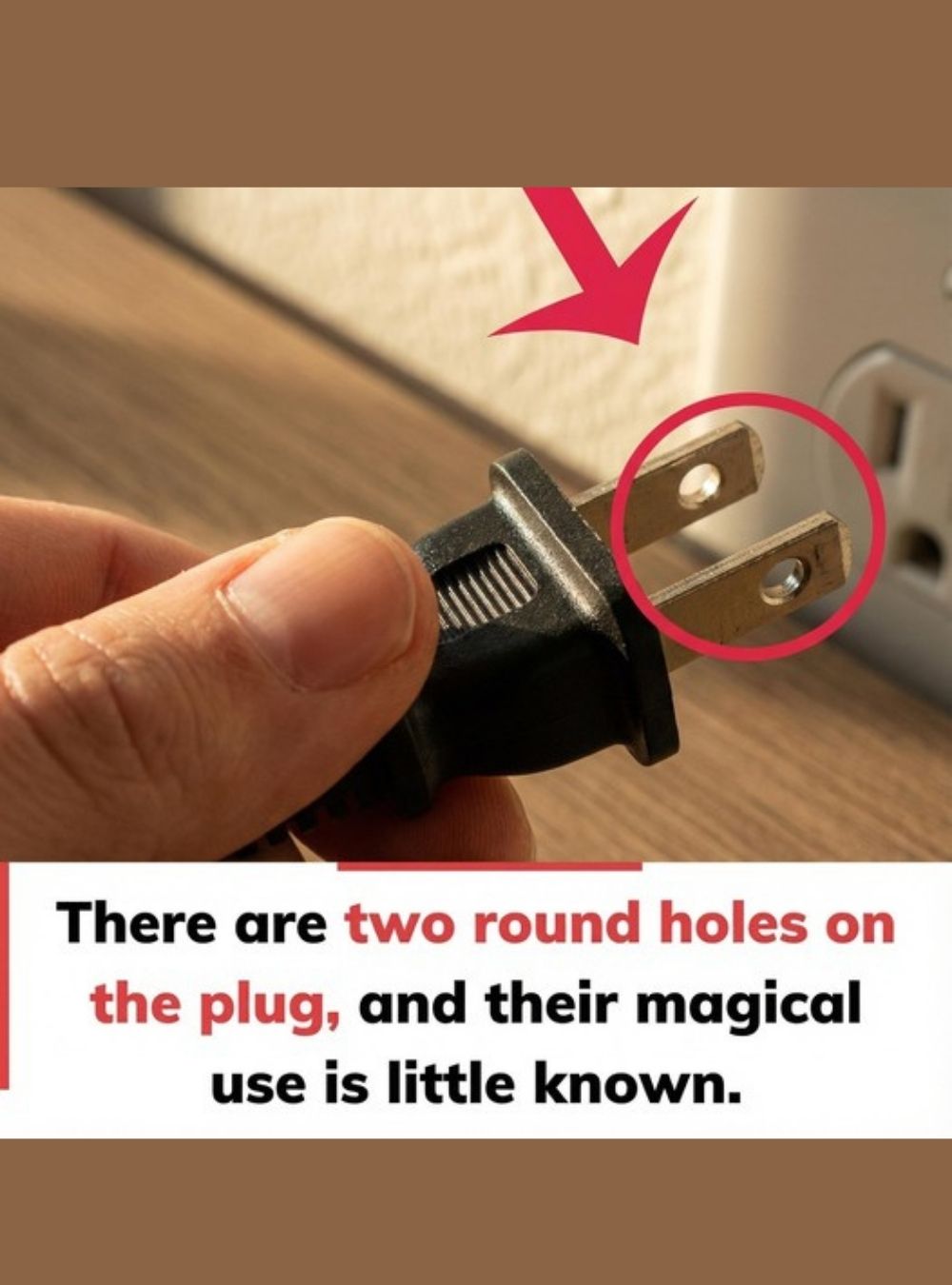
Have you ever taken a closer look at an electrical plug and noticed the two small round holes near the ends of the metal prongs? Most people see them every day without giving them a second thought. They look minor, almost decorative, yet they are the result of deliberate engineering choices designed to improve safety, stability, and everyday reliability.
One of the main reasons these holes exist is to help the plug sit more securely in the outlet. Inside many wall sockets are small internal contact points designed to grip the prongs. The holes allow those contacts to align better, creating a firmer hold once the plug is inserted. This reduces the chance of the plug slipping out or becoming loose over time, which helps maintain a steady flow of electricity and lowers the risk of sparks or overheating.
These tiny openings also contribute to household safety. A plug that fits properly is less likely to leave metal prongs partially exposed, reducing the risk of accidental contact. This is especially important in busy homes, where movement, children, or pets can easily bump into cords. While the holes are only one part of a larger safety system, they help ensure the plug reaches the correct depth and remains stable during use.
Beyond daily use, the holes serve practical purposes during manufacturing and packaging. They allow plugs to be held in place by machinery during production, secured with ties, or sealed efficiently for retail packaging. This helps protect the product during transport and keeps everything organized without adding extra materials.
In the end, those two small holes are a perfect example of how thoughtful design often goes unnoticed. Simple details, quietly doing their job, can make everyday objects safer, more reliable, and more efficient — even if most of us never stop to wonder why they’re there.