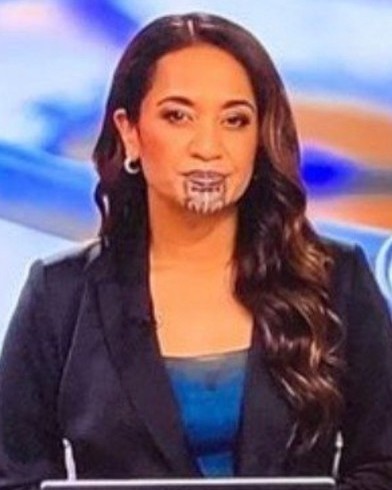

A TV host with a traditional Māori face tattoo has elegantly replied to negative comments from a viewer, proudly standing up for her cultural background and identity.
Facial tattoos often spark discussions online, with some people claiming that tattoos should only be on the body, while others appreciate the cultural importance they hold.
Oriini Kaipara, 41, a groundbreaking TV presenter, made history by joining New Zealand’s Newshub as a newsreader, becoming the first primetime TV news bulletin presenter to have a moko kauae, a respected cultural symbol worn by Māori women.
Māori, the native Polynesian people of mainland New Zealand, see moko kauae as deep symbols of heritage and identity. These facial tattoos, traditionally placed on the lips and chins, represent a woman’s family ties, leadership in her community, and honor her ancestry, status, and skills.

However, despite the praise, one viewer named David expressed his dissatisfaction with Kaipara’s moko kauae in an email to Newshub.
“We strongly object to you having a Māori newsreader with a moku [moko] that looks offensive and aggressive,” he wrote, according to the Daily Mail. “It’s not a good look. She also suddenly uses the Māori language, which we don’t understand. Please stop it now.”
Not discouraged by David’s negative comments, Kaipara courageously tackled the situation directly, sharing screenshots of the messages on her Instagram story and responding with poise and respect.
“Today I had enough. I responded. I never do that. I broke my own rule and hit the send button,” she shared on an Instagram story along with a screenshot of David’s message.

Kaipara also shared her email reply to David, where she mentioned that she couldn’t take his complaint seriously because there was no violation of broadcast standards.
She also pointed out his misspelling of moko, as David had called hers “moku”.
In her email, Kaipara went on to say: “I understand your complaints come from your personal preference on how people should look on-screen. Moko and the people who have them are not threatening and shouldn’t face such discrimination, harassment, and prejudice.
“We mean no harm or bad intentions, nor do we/I deserve to be treated with such disrespect,” she added. “Please stop complaining and hold back your cultural ignorance and bias for another lifetime, ideally in the 1800s.”

Even with David’s harsh remarks, Kaipara was quick to point out that she mostly gets positive feedback, and that mean trolls are rare.
In an interview with the New Zealand Herald shortly after addressing David’s complaint, Kaipara discussed the importance of having more Māori advocates: “The fact that my presence bothers some people shows why we need more Māori advocates in important positions across all sectors.”
Overall, Kaipara’s dignified reply is a strong reminder of the significance of cultural pride and resilience when facing challenges – and she’s motivating others to embrace their identities without apology and confront discriminatory views.
What do you think about this story? Share your thoughts in the comments!